

Cereal bars have a bit of a poor reputation. Mention a cereal bar in front of a health-conscious individual and you’ll generally hear something like “…but they’re so full of sugar.” They tend to be categorised with biscuits, thought to be “too sweet”, and swapped for something with a “cleaner” label.
Some of that is fair (or at least, it used to be) – although I do often question what people think the role of sugar is in the diet, and if foods were ‘less sweet,’ would anyone enjoy them? – But, what’s not understood well is how these products are made, and why the sugar is there in the first place. By understanding the processes behind a cereal bar, you can make a more informed decision about whether to choose them or not.
What’s in a cereal bar?
In general, cereal bars are made from a combination of these five components:
-
Oats and other cereals. The base and bulk, usually a combination of rolled oats, rice crisps, and/or wheat flakes.
-
Dried fruit. Sweetness, chew (texture) and colour.
-
Nuts and other inclusions. Crunch and flavour, things like nuts, seeds, chocolate chips, fudge pieces.
-
The binder. The ‘glue’ that holds the dry ingredients together, traditionally a sugar syrup. At home, you might use honey or date sugar. Still sugar.
-
Fat. Often palm oil, for mouthfeel/texture and shelf life. The homemade recipes will generally use peanut butter or coconut oil.
The role of the binder.
Oats, nuts and dried fruit don’t stick – put them together and you have muesli, not a bar. To create a convenient snack that can be thrown in a bag to be eaten later, the components need coating before setting firmly together. Originally this was always a sugar syrup like glucose syrup, invert sugar syrup, honey or golden syrup.
The sugar was never ‘hidden’ in a cereal bar to con the consumer. It’s there to play a structural role. Without it, there is no product. And this is why it’s not as simple as just “take the sugar out” – it’s a more complex process with a few things to consider.
Over the years, cereal bars have changed.
Our perception of cereal bars might still be the same, but with rising pressure to reduce sugar in products, many manufacturers have replaced part of that syrup with a soluble fibre - most commonly, chicory root fibre (inulin and oligofructose). A typical ‘reformulated’ bar using “oligofructose syrup” as the binder, now has around 15g of sugars per 100g and 26g of fibre, compared with 30g or more of sugars in a more conventional syrup-bound bar.
The food science-y stuff that improve the nutrition of a product will always come with trade-offs:
-
Taste and sweetness. Oligofructose is only 30–50% as sweet as sucrose (sugar), so bars can taste noticeably less sweet unless flavourings or other sweeteners are added… queue the ‘longer ingredients list.’
-
Texture. Fibre syrups behave differently as they cool and age on the shelf. Bars can end up firmer, chewier or drier, and may harden over time. Humectants such as glycerol are often added to help hold moisture.
-
Viscosity. Fibre syrups are typically thicker and stickier than glucose syrup, which makes them harder to pump, mix evenly and spread/mould during manufacturing. In practice, that can mean slower production lines.
-
Cost. Fibre ingredients cost a lot more than glucose syrup – manufacturers also need to account for longer development and the testing times that reformulation needs.
There’s also a tolerable limit to consider. Inulin-type fibres are fermented in the large intestine, and larger amounts can cause bloating or wind in some people. For most people, one bar won’t be a problem, but issues can arise in sensitive people or if you’re eating multiple fibre-enriched products a day.
The difference between “no added sugar” and low sugar
An alternative to a syrup binder is to use the sticky runny paste extracted from fruits like dates, raisins or apple, which also provides the sweetness. Home-made snack bars will often use fruit paste.
In standard cereal bars, dried fruits tend to be minor ingredients, and these can be sweetened themselves - sweetened dried cranberries are a common example. Fruit juice concentrates are often added for flavour and colour.
For “no added sugar” to appear on the label, under UK nutrition claims law, ‘no sugars, or any other food used for its sweetening properties, can be added.’ That means any products using honey, syrups or fruit juice concentrates cannot carry the claim. If sugars are naturally present, the label must say “contains naturally occurring sugars”.
‘No added sugar’ claims tell you how the sugar got there, not how much there is. A date-and-nut bar can easily contain more sugar than a conventional cereal bar. Nakd Cocoa Orange has 38.9g of sugars per 100g. Kellogg’s Rice Krispies Squares has 32g.
Cold-pressed bars
Cold-pressed bars remove the need for a liquid binder altogether. Whole dried fruit and nuts are blended, pressed into shape and cut – the blending results in the sticky texture which holds structure without the need to bake. The most well known cold-pressed brand in the UK is Nakd – their cocoa organge bar is dates (40%), cashews (40%), raisins (14%) and cocoa (5%), plus orange oil and flavouring.
Why consumers like them?
-
Short and recognisable ingredient list.
-
No added sugars or syrups.
-
They usually come with gluten free, dairy free and vegan claims.
What consumers don’t necessarily understand…
-
They’re generally higher in sugar from the higher fruit content.
-
Per bar they still contain a similar (if not higher) energy density to standard bars depending on the inclusions - a 35g Nakd bar is 146 kcal.
-
They tend to cost more than a standard cereal bar.
This is not me saying they are a bad choice. It just means “natural, no added sugar” and “low in sugar” are two different things to understand.
How different snack bars compare nutritionally:
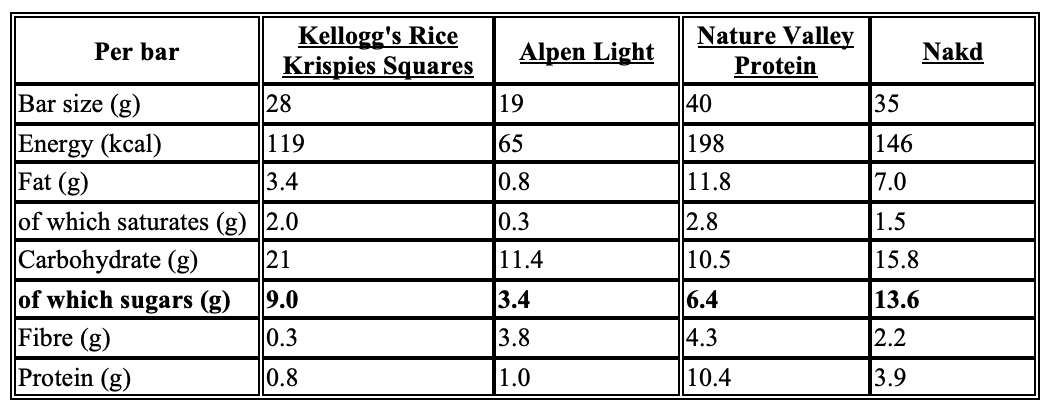
These are the nutrition differences you’d see between a classic syrup-bound bar, higher fibre-bound reformulated bar, nut-based bar and a cold-pressed bar.
What you’ll notice:
-
The “no added sugar” bar has the most actual sugar. Nakd is 13.6g per bar vs 9g from the squares bar (although the squares bar has more total carbohydrates from the rice).
-
Bar size will always impact the nutrition but reflects how much is eaten in 1 serving. Alpen Light is the lowest in nearly everything – some of this is because of the fibre used in the binder, but it’s also only 19g per bar.
-
Think of the nut-bar as more of a ‘snack’ bar rather than a cereal bar. Nuts and cereal are very different. It has the most protein and fibre, but also the most energy and fat (mostly unsaturated) – mainly from nuts and protein crisp pieces.
-
The squares bar is mostly carbohydrate. It’s a great immediate energy source but unlikely to keep you feeling satisfied for very long!
As with all food, there is nothing inherently wrong with cereal bars.
The ingredients and production process has changed, so focussing on cereal bars as a source of “hidden sugar” isn’t an accurate view-point. The sugar in a cereal bar generally has a structural role – without it, or without a substitute, there is no bar.
If you want to buy and enjoy cereal bars, go ahead! A lot of them are actually great as a little snack in the day, not only offering energy, but also offering other nutrition benefits like a source of fibre. Here’s what to check on the label:
-
Look at the nutrition per-bar rather than just per 100g. Bar sizes in size significantly so make sure you know what you will eat in that moment.
-
“No added sugar” is statement about the ingredients, not really the sugar content. Still check the nutrition label for the total sugar content if this is important to you.
-
What’s your expectation of the cereal bar? An easy and convenient source of carbohydrates (energy) before training? Or are you looking for something that reduces hunger and supports satiation before lunch. Fibre, protein and fat help with the latter! Choose your bar appropriately.
-
Notice the fibre source. If a bar is higher in fibre and lower in sugar, some of that fibre likely comes from chicory root in the binder. Usually absolutely fine – but if you have a gut sensitivity to high amounts, be aware of what else is in your diet.
-
One cereal bar does not carry a moral weighting. A cereal bar is a snack. That’s it. Enjoy as part of your balanced diet.
It’s worth understanding a food before you fear it :)